Handmade Tin Box by Russian POW – 1947 Dated – Post-WWII Prisoner of War Relic
$10.2
$14.08
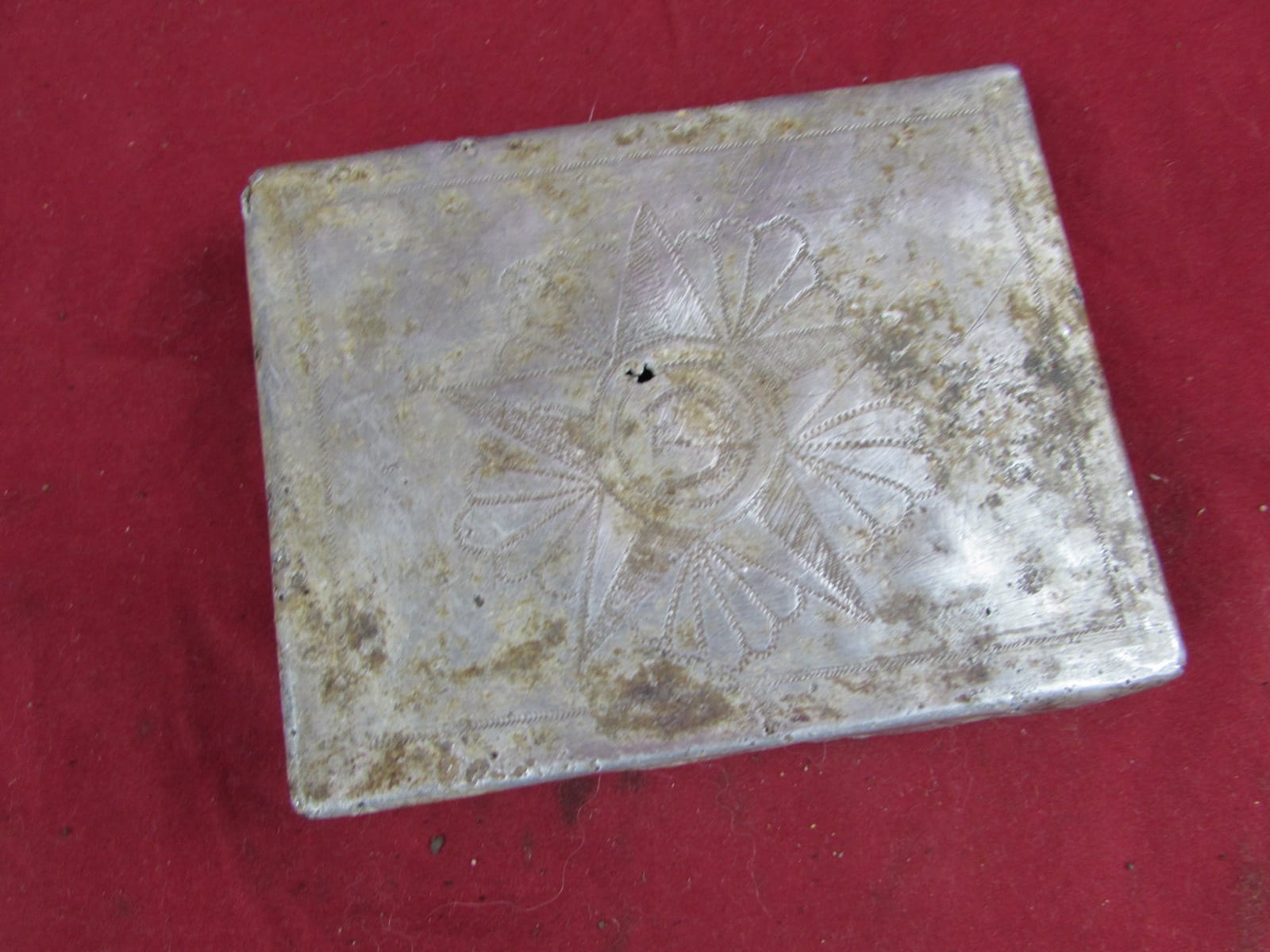
Handmade Tin Box by Russian POW – 1947 Dated – Post-WWII Prisoner of War Relic A small handmade tin box, possibly for cigarettes, crafted by a Russian prisoner of war (POW) and dated 1947. This poignant post-Second World War relic represents the personal ingenuity and resilience of POWs during the difficult years following the conflict. Simple in construction yet rich in human history, the box reflects the tradition of prisoners creating practical or decorative items from available scrap materials — often for personal use, barter, or as keepsakes. Artefacts directly associated with POW life are increasingly scarce, particularly those clearly dated to the immediate post-war period. In 1947, Soviet Special Camps held a large population of Axis POWs and detainees in brutal conditions, with mortality peaking that year due to malnutrition and illness. Concurrently, 1947 marked the end of forced repatriations of Soviet citizens (“Operation Keelhaul”) who had served in the Russian and German Army. Conditions in Soviet camps were dire, often called “silence camps” (Schweigelager) where inmates had no contact with the outside world. While some repatriation began, hundreds of thousands of German, Japanese, and other Axis soldiers remained in forced labor camps. The Soviet Union experienced a major famine, which severely impacted the already meager food supplies for prisoners in the Gulag system. Repatriation of Soviet POWs & Civilians in May 1947 marked the final transfer of roughly 1,000 Soviet nationals, who had served in the German Army, from Western Allied control back to the Soviet Union (Operation Keelhaul). Soviet run camps for their own POWs and citizens awaiting processing in France existed until the Soviet mission was expelled in Dec 1947. Although the Second World War officially ended in 1945, many prisoners remained in captivity for years afterward. In the Soviet Union and across Eastern Europe, the repatriation of POWs could be delayed, with many individuals not returning home until 1947 or later. During captivity, prisoners frequently crafted small personal items from salvaged metal, scrap tin, or repurposed materials. Cigarette boxes, match holders, and small storage tins were among the most common handmade objects. These items served multiple purposes: Storage of tobacco or personal effects Gifts or trade items within camps Keepsakes marking survival and endurance Expressions of identity and craftsmanship under hardship A dated 1947 example places this piece firmly within the transitional post-war period, when many POWs were still displaced far from home. Construction & Characteristics Handmade tin construction Compact size (possibly for cigarettes or small personal items) Dated 1947 Crafted by a Russian POW Period wear consistent with use Authentic utilitarian wartime/post-war craftsmanship The hand-finished nature of the piece gives it strong character and individuality, reflecting the conditions under which it was made. Collector & Display Value This POW-made tin box is ideal for: Collectors of WW2 and post-WW2 POW artefacts Social and human history enthusiasts Eastern Front or Soviet-era history collectors Museum or educational displays exploring captivity and repatriation Those seeking personal, story-driven historical objects Unlike standard military equipment, POW-made items provide insight into daily life and survival rather than combat. Condition Original period condition with age-related wear consistent with handmade construction and long-term preservation. Please refer to photographs for surface details and craftsmanship features. Antiqurio Collection Note At Antiqurio, we seek artefacts that reflect the human dimension of history. This 1947 dated POW-crafted tin box is not simply a utilitarian object — it is a quiet testament to endurance, resourcefulness, and the personal stories that continued long after the guns fell silent in 1945.